Share cost-effective products and high-quality services with customers. Contact Us


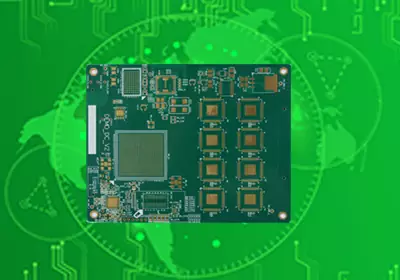
Circuit board waterproofing is the process of protecting a PCB assembly from moisture, condensation, water exposure, and other environmental conditions that can affect electrical performance and long-term reliability. Water and humidity can cause corrosion, insulation degradation, leakage currents, short circuits, and deterioration of solder joints or exposed conductors. For electronic products designed for outdoor environments, industrial equipment, vehicles, sensors, control systems, and other applications where moisture is difficult to avoid, protecting the circuit board needs to be considered as part of the overall product design.
Waterproofing a circuit board does not simply mean applying a protective material over the PCB surface. The actual protection system may involve conformal coating, potting or encapsulation, a sealed enclosure, protected connectors, cable-entry sealing, appropriate PCB layout, and environmental validation. The method depends on whether the product will experience humidity, condensation, occasional splashes, cleaning or washdown, temporary immersion, or continuous exposure to water. A coating that works well against humidity may not be sufficient for an assembly that must remain functional under prolonged immersion.
Why Circuit Boards Need Waterproofing
Moisture can affect a PCB in several different ways. Water on the board surface can create a conductive path between adjacent conductors, while prolonged humidity can accelerate corrosion of exposed copper and other metal surfaces. Contamination left on the PCB surface can make these effects more severe because moisture interacting with ionic residues can increase electrical leakage and corrosion risk.
The problem is not limited to visible water. Humid environments and temperature changes can create condensation on the PCB surface even when a product is not directly exposed to rain or splashing water. When a device moves between different temperature conditions, moisture inside the enclosure can condense on cooler surfaces and create a thin water layer over the circuit board. Research into humidity-related electronic failures has shown that PCBA cleanliness, coating adhesion, coating properties, board design, and environmental exposure can all affect the resulting corrosion behavior.
For this reason, circuit board waterproofingshould be considered according to the actual environmental conditions of the finished product. A PCB installed inside a dry indoor enclosure requires a different level of protection from an outdoor sensor exposed to rain, an industrial controller subjected to washdown, or an electronic module that may be temporarily submerged.
Is a Waterproof PCB Really Waterproof
The term “waterproof PCB” can be misleading because different protection methods provide different levels of resistance to water. A conformal coating, for example, creates a thin protective film over selected surfaces of the assembled PCB and can significantly improve resistance to humidity, condensation, dust, and environmental contaminants. However, conformal coating by itself does not automatically make the complete electronic assembly suitable for prolonged immersion.
This distinction is important when defining the protection requirements of a product. Moisture resistance may be sufficient for an electronic assembly operating in a humid environment, while a product exposed to direct water jets or immersion may require a sealed enclosure, protected interfaces, potting, or a combination of these methods. The actual water resistance of the finished product depends on the entire protection system rather than the PCB coating alone.
An IP rating should also not be assumed simply because a PCB has been coated. IP protection describes the enclosure's resistance to the ingress of solids and water under specified test conditions. Connectors, cable entries, switches, enclosure joints, gaskets, and other openings can determine whether the complete product achieves its intended protection level.
Conformal Coating for Circuit Board Waterproofing
Conformal coating is one of the most widely used methods for improving the environmental resistance of an assembled PCB. Instead of completely encapsulating the circuit board, the coating forms a thin polymer layer that follows the contours of the board, components, solder joints, and other covered surfaces. This approach provides protection while adding relatively little weight and physical volume.
The main purpose of conformal coating is environmental protection rather than complete immersion waterproofing. Depending on the material and application process, coatings can help reduce the effects of humidity, condensation, airborne contaminants, and corrosive environments. Acrylic, silicone, urethane, and other coating chemistries are used for different combinations of environmental, thermal, electrical, and mechanical requirements.
The effectiveness of the coating depends heavily on surface preparation and application quality. Dust, flux residue, oil, moisture, and other contaminants can interfere with adhesion and create weak areas beneath the coating. Research into conformal coating performance has specifically highlighted the importance of PCBA cleanliness because process-related contamination can influence water accumulation and corrosion at the coating interface.
A coating also needs to be properly cured. An uneven, incomplete, contaminated, or poorly adhered coating may provide much less protection than expected. For production applications, the coating specification should therefore define the required coverage, material, thickness, curing conditions, keep-out areas, and inspection criteria rather than simply stating that the PCB should be “waterproof.”
Potting and Encapsulation for Stronger Protection
When a circuit board must withstand more severe environmental exposure, potting or encapsulation can provide a higher level of physical protection than a thin conformal coating. During potting, a resin material surrounds the electronic assembly and fills the available space around components and electrical structures. The resulting encapsulated assembly has a substantially different physical structure from a conventionally coated PCB.
Potting can provide protection against water, moisture, dust, vibration, mechanical shock, and other environmental factors. Because the electronics are surrounded by the encapsulating material, water has fewer direct paths to the circuit board and its components. This makes potting useful for applications where a thin protective film does not provide enough environmental resistance.
The trade-off is that potting can make inspection, repair, component replacement, and rework much more difficult. The encapsulating material can also affect heat transfer and mechanical stress within the assembly. For that reason, potting should not be selected simply because it provides stronger protection. The thermal characteristics of the components, repair requirements, enclosure structure, and expected service conditions all need to be considered before the process is defined.

Waterproofing Through Enclosure Design
Protecting the PCB surface is only one part of circuit board waterproofing. In many products, the enclosure provides the primary barrier between the electronics and the outside environment. A well-designed enclosure can prevent water from reaching the PCB while also controlling how air, moisture, and heat move around the electronic assembly.
Potential water-entry paths include enclosure seams, connectors, cable glands, switches, ventilation openings, mounting points, and interfaces between different housing components. Even when the PCB itself has a conformal coating, an unprotected connector can provide a direct path for water to reach the electrical system.
This is why the PCB and enclosure should be designed together. The location of connectors, exposed test points, switches, heat-producing components, and ventilation structures can all influence the waterproofing strategy. For products requiring a defined IP rating, the enclosure and all external interfaces need to be considered as part of the same protection system rather than treating the PCB coating as a separate afterthought.
PCB Layout Considerations for Waterproofing
The PCB layout can also influence how well an assembly performs in a humid or wet environment. Adequate creepage and clearance between conductors become particularly important when moisture or contamination may be present on the board surface. If conductive contamination forms a path between two closely spaced conductors, the resulting leakage current can affect circuit operation.
Sensitive circuits should therefore be reviewed carefully when the product is intended for high humidity or condensation. High-voltage sections, power supplies, connectors, exposed conductors, and areas where contaminants are likely to accumulate may require additional spacing or protective measures.
Component placement can also affect the waterproofing process. Components that must remain accessible for mechanical reasons, thermal interfaces that require direct contact, connectors that cannot be coated, and test points that need to remain exposed all need to be identified before coating or encapsulation. Defining these keep-out areas during PCB design helps prevent problems during assembly.
PCB Cleanliness Before Waterproofing
A protective coating cannot compensate for poor PCB cleanliness. Before conformal coating or other protective treatment is applied, the assembly needs to be sufficiently clean and dry for the selected material and process. Residues from soldering, flux, handling, dust, oil, or other manufacturing processes can interfere with coating adhesion and may contribute to moisture-related electrical problems.
This becomes particularly important in high-humidity applications. Moisture can accumulate around contaminants on the PCB surface, creating localized conductive paths and increasing the possibility of corrosion. Studies of conformal coating performance have shown that contamination and coating adhesion are closely related to the ability of a coated PCBA to withstand humidity exposure.
Cleaning requirements should therefore be established together with the coating specification. The appropriate cleaning method depends on the PCB assembly process, components, residues, coating chemistry, and product requirements. After cleaning, the board also needs to be adequately dried before the protective material is applied.
Choosing the Right Waterproofing Method
There is no single waterproofing method suitable for every circuit board. The appropriate approach depends on how the product will be exposed to water and moisture during its expected service life. Humidity and condensation may only require a properly specified conformal coating combined with appropriate enclosure design. Occasional splashing may require additional sealing around the enclosure and connectors. Products exposed to washdown or immersion may require more extensive sealing, encapsulation, or a combination of protection methods.
Thermal requirements also influence the decision. A waterproofing material surrounds electronic components and can change how heat moves away from them. This is especially important for power electronics and other assemblies with significant heat generation. The selected material therefore needs to be compatible with the operating temperature and thermal design of the product.
Serviceability is another consideration. A coated PCB may still be repairable if the coating can be selectively removed and reapplied, while a fully potted assembly can be much more difficult or even impractical to repair. Production volume, maintenance requirements, expected service life, and cost should therefore be considered together with environmental protection.
Testing Circuit Board Waterproofing
Waterproofing performance should be validated against the actual environmental conditions the product is expected to encounter. A generic water test may not represent the real application. A device exposed to condensation experiences a different type of moisture than a product subjected to water jets or temporary immersion.
Testing can therefore include humidity exposure, condensation testing, water splash testing, washdown testing, thermal cycling, or immersion testing, depending on the product requirements. The objective is to determine whether the complete electronic assembly continues to meet its electrical and mechanical requirements after environmental exposure.
For products that require a specified IP rating, testing should evaluate the complete enclosure and its interfaces rather than the PCB alone. A coated circuit board may survive a particular moisture test while the finished product still allows water to enter through a connector or enclosure seam. The validation method should reproduce the actual protection system used in production.
Common Circuit Board Waterproofing Problems
Many waterproofing failures are caused not by the protective material itself but by gaps between the design, manufacturing process, and environmental requirements. Applying a coating without defining the required coverage can leave sensitive areas exposed. Poor cleaning can weaken adhesion, while incomplete curing can reduce the expected protective performance. Excessive coating thickness or material incompatibility can also create assembly or thermal problems.
Another common issue is treating the PCB as the only part that needs protection. Water can enter through connectors, cable openings, enclosure joints, switches, or ventilation structures even when the circuit board has been completely coated. This is why waterproofing needs to be evaluated at the product level.
Condensation can also remain a problem inside an apparently sealed enclosure. An enclosure can prevent external water from entering while still trapping humid air inside. When the internal temperature falls below the dew point, moisture can condense on the PCB or other internal surfaces. In such cases, enclosure design, pressure equalization, moisture control, and PCB protection may all need to work together.
When Circuit Board Waterproofing Is Necessary
Circuit board waterproofingbecomes particularly important when electronic equipment is expected to operate in environments where moisture cannot be reliably controlled. Outdoor electronics may encounter rain and condensation, industrial equipment may be exposed to humidity, cleaning fluids, or washdown processes, and automotive or transportation electronics can experience water, temperature changes, and contaminants.
The requirement should be based on the actual exposure rather than simply describing a product as “outdoor” or “waterproof.” An outdoor device installed under a protected roof may face very different conditions from a sensor mounted directly in an exposed location. Similarly, a device exposed to occasional splashing does not necessarily require the same protection system as one that must remain operational while submerged.
Defining the environmental exposure early makes the waterproofing strategy much easier to develop. Temperature range, humidity, condensation, water exposure, chemicals, salt, pressure, immersion time, maintenance requirements, and expected service life can all influence the final design.
Circuit board waterproofing is not simply a matter of covering a PCB with a waterproof material. Reliable protection comes from combining the right PCB design, surface preparation, protective coating or encapsulation, enclosure structure, connector sealing, and environmental validation. The appropriate solution depends on the actual conditions the electronic assembly must withstand.