Share cost-effective products and high-quality services with customers. Contact Us


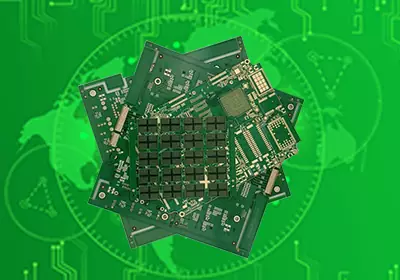
A high Tg multilayer PCB is designed for applications where the circuit board must maintain stable mechanical and electrical performance under repeated heating, lead-free soldering, or elevated operating temperatures. Compared with conventional FR-4, high Tg laminate can provide greater resistance to thermomechanical stress, particularly in multilayer structures where the board contains many dielectric layers, copper planes, vias, and plated through-holes. The choice of laminate therefore becomes an important part of PCB reliability rather than simply a material specification.
As electronic products become more compact and functional, multilayer PCB designs are increasingly exposed to demanding thermal conditions. High component density, multiple soldering cycles, heavy copper structures, and high-power components can all increase the amount of heat experienced by the board. In these situations, understanding how glass transition temperature affects the behavior of the laminate can help designers select a suitable material and avoid reliability problems during fabrication and assembly.
The term Tg refers to the glass transition temperature of the resin system used in the PCB laminate. It describes the temperature range at which the cured resin changes from a relatively rigid state to a softer and more flexible state. This transition does not mean that the PCB immediately fails when the temperature reaches Tg. Instead, the material's mechanical behavior begins to change, and its coefficient of thermal expansion, particularly in the Z-axis, can increase significantly.
This characteristic is especially important in a multilayer PCB because the board contains multiple layers of copper and dielectric material that expand at different rates when temperature changes. Copper has a relatively low coefficient of thermal expansion, while the resin system expands much more strongly in the thickness direction after passing through the glass transition region. Repeated movement between these states can place mechanical stress on plated through-holes, vias, copper connections, and internal layer structures.
High Tg materials are therefore commonly considered when a multilayer board needs greater thermal stability than conventional FR-4 can comfortably provide. Depending on the laminate system and manufacturer, high Tg materials may be specified in ranges such as 150°C, 170°C, or higher. The exact Tg value, however, should not be considered independently from other material properties such as decomposition temperature, Z-axis CTE, thermal resistance, moisture absorption, dielectric properties, and processing requirements.
Why Tg Matters More in Multilayer PCB Designs
Thermal expansion becomes increasingly important as the number of PCB layers increases. A simple two-layer board has fewer internal interfaces and generally experiences less cumulative mechanical stress than a high-layer-count board containing numerous plated connections. In a multilayer structure, the same thermal cycle can affect the entire stackup, and repeated expansion and contraction can gradually increase stress around vulnerable areas.
One of the most important areas is the plated through-hole. During heating, the laminate expands in the Z-axis while the copper barrel inside the hole behaves differently. If the difference in expansion becomes large enough, repeated thermal cycling can contribute to fatigue and eventually create cracks in the plated copper. This is one reason high Tg laminates are frequently considered for multilayer boards that must withstand repeated reflow, rework, or long-term thermal cycling.
The same principle applies to vias and other copper structures embedded within the multilayer stack. A board may function normally during initial electrical testing but experience reliability problems after many thermal cycles. For products expected to operate for long periods or undergo repeated assembly processes, the thermal behavior of the laminate therefore needs to be considered together with the electrical design and mechanical construction of the PCB.
High Tg Does Not Mean Maximum Operating Temperature
One common misunderstanding is to treat the Tg value as the maximum temperature at which a PCB can operate. This is not an accurate interpretation. Tg indicates a change in the behavior of the resin system; it is not a simple maximum operating-temperature rating.
A PCB can temporarily pass through the Tg region during a soldering process without immediately failing. Lead-free assembly, for example, can expose a board to peak temperatures well above the Tg of many PCB materials. The more important question is how the material behaves during that exposure, how long it remains at elevated temperature, how many times the thermal cycle is repeated, and whether the resulting mechanical stress remains within an acceptable reliability margin.
For this reason, selecting a high Tg multilayer PCB should not be based only on choosing the highest Tg available. Other properties such as Td, Z-axis CTE, T260 or T288 performance, moisture behavior, and the complete thermal profile of the assembly process can also affect the final reliability of the board.
High Tg Materials and Lead-Free Assembly
Lead-free soldering has increased the importance of thermal performance in PCB material selection. Typical lead-free reflow processes expose assemblies to temperatures significantly higher than the Tg of conventional FR-4. Although passing through Tg during reflow is not automatically a failure condition, repeated exposure increases the thermal stress placed on the laminate and its plated structures.
The situation becomes more demanding when a multilayer PCB passes through several reflow cycles or requires additional rework. Every heating and cooling cycle produces dimensional changes in the board. If the PCB contains a high density of vias, large copper areas, thick copper layers, or a relatively large number of layers, the accumulated mechanical stress can become an important reliability concern.
High Tg laminate can provide a larger thermal margin and better dimensional stability during these processes. However, material selection alone cannot eliminate assembly-related risks. Moisture control, the actual reflow profile, board thickness, copper distribution, and the number of thermal cycles still need to be controlled. High Tg material should therefore be viewed as one part of a complete thermal reliability strategy rather than a replacement for proper manufacturing control.
Stackup Design Is Important for High Tg Multilayer PCB
Choosing a high Tg laminate changes more than the temperature specification of the PCB. The material has its own dielectric characteristics, resin content, thermal expansion behavior, and lamination requirements, all of which can influence the final stackup.
For controlled-impedance multilayer designs, the actual dielectric properties of the selected laminate should be used when calculating trace width, spacing, and impedance. A generic FR-4 value may not accurately represent a particular high Tg material. This becomes more important in high-speed designs where small changes in dielectric thickness or dielectric constant can affect signal integrity.
The copper distribution should also be considered during stackup development. Large copper areas, power planes, signal layers, and areas with very different copper densities can produce uneven thermal behavior during fabrication. A well-balanced multilayer stackup can help reduce unwanted deformation and improve consistency during lamination. The goal is not simply to increase Tg but to create a stackup in which the materials, copper distribution, dielectric thicknesses, and fabrication process work together.
Manufacturing a High Tg Multilayer PCB Requires Process Control
High Tg materials cannot always be treated as a direct replacement for standard FR-4. The resin chemistry and thermal characteristics can change how the material behaves during lamination, drilling, desmear, plating, and subsequent processing. A suitable manufacturing process therefore needs to be established according to the selected laminate rather than relying blindly on a standard FR-4 process window.
Lamination is particularly important because insufficient curing can prevent the material from reaching its intended thermal and mechanical properties. At the same time, excessive thermal exposure can introduce other process problems. The press cycle needs to provide appropriate temperature, pressure, heating rate, and curing time for the specific resin system and stackup. Multilayer boards with sequential lamination or complex HDI structures require even tighter control because the board may experience several thermal processing cycles.
Drilling also deserves attention. High Tg materials can have different mechanical characteristics from conventional FR-4, and some formulations containing fillers can increase drill wear. Poorly controlled drilling can result in rough hole walls, resin damage, burrs, or other defects that later affect plating reliability. For a high-layer-count board with a large number of vias, drilling quality becomes closely connected to the long-term reliability of the finished PCB.
After drilling, desmear and copper plating must create a reliable connection between the hole wall and the surrounding copper structures. Any weakness introduced during drilling or surface preparation can become more significant when the board is repeatedly exposed to thermal cycling. This is why high Tg multilayer PCB fabrication should be treated as a complete process rather than simply a material substitution.
When Should You Consider a High Tg Multilayer PCB
A high Tg material becomes more relevant when a PCB is expected to experience substantial thermal stress during assembly or operation. This can include multilayer boards with high layer counts, products that undergo multiple lead-free reflow cycles, equipment containing significant heat-generating components, and electronic systems that need stable operation over a long service life.
It can also be useful when the design contains a high density of plated through-holes or vias. In these structures, the difference between the thermal expansion of the laminate and copper becomes particularly important. Reducing thermomechanical stress can improve the reliability margin of the interconnection system, especially when the board will experience repeated heating and cooling throughout its service life.
At the same time, not every multilayer PCB needs a high Tg laminate. If the board operates under moderate temperatures and has a relatively simple assembly process, a properly specified standard FR-4 material may already provide sufficient performance. The decision should be based on the actual thermal environment, assembly profile, expected service life, layer structure, and reliability requirements rather than on layer count alone.
High Tg Multilayer PCB vs Standard FR-4
The main difference between high Tg and standard FR-4 is not that one material can tolerate heat while the other cannot. Both materials can be used successfully when their characteristics match the application. The difference is the amount of thermal and mechanical margin available when the PCB is exposed to temperatures around and above the resin system's glass transition region.
Standard FR-4 remains suitable for many conventional electronic products. High Tg materials become more attractive when the board is exposed to repeated thermal cycles, demanding lead-free assembly conditions, high component density, or long-term elevated temperatures. The higher Tg can help maintain mechanical stability over a wider temperature range, while the specific CTE and thermal resistance of the laminate determine how effectively the board handles repeated thermal stress.
Material cost is also only one part of the decision. Changing to a higher-performance laminate may affect lamination cycles, drilling parameters, material availability, impedance calculations, and overall fabrication requirements. For this reason, the material should be selected together with the PCB manufacturer during the engineering stage rather than being changed after the board has already entered production.
Testing and Reliability Verification
The performance of a high Tg multilayer PCB should ultimately be confirmed through appropriate testing rather than assumed from the material name alone. Thermal stress testing can help evaluate the behavior of plated through-holes, vias, solder connections, and laminate structures after repeated temperature exposure. Depending on the product requirements, manufacturers may also evaluate thermal resistance, dimensional stability, insulation reliability, and resistance to delamination.
The specific tests should correspond to the expected operating environment and applicable industry requirements. A board intended for a stable indoor electronic device does not necessarily require the same qualification strategy as a multilayer PCB designed for severe thermal cycling. Establishing the reliability requirements before material selection makes it easier to determine whether a high Tg laminate provides meaningful additional value.
Choosing the Right High Tg Material
There is no single high Tg laminate that is appropriate for every multilayer PCB. A practical selection process should begin with the actual temperature conditions of the product and assembly process, followed by consideration of layer count, board thickness, via structure, copper weight, impedance requirements, thermal cycling, and expected service life.
The Tg value should then be considered together with other technical parameters. A material with a higher Tg is not automatically the best choice if its dielectric characteristics, processing behavior, thermal decomposition performance, or other properties are unsuitable for the design. Recent technical discussions on high Tg materials increasingly emphasize this broader approach, particularly for multilayer and high-reliability applications.
For engineering teams, the most useful specification is therefore not simply “high Tg FR-4.” The PCB documentation should identify the required material characteristics clearly enough for fabrication and assembly teams to understand the intended performance. This reduces the risk of substituting a material that has a similar nominal Tg but significantly different thermal, mechanical, or electrical behavior.
A high Tg multilayer PCB is primarily about controlling thermomechanical stress and maintaining reliability when a multilayer circuit board is exposed to demanding thermal conditions. The higher glass transition temperature can provide greater thermal stability, but its real benefit depends on the complete material system, stackup design, lamination process, drilling quality, plating reliability, and assembly profile.
For multilayer boards that experience repeated lead-free reflow, high operating temperatures, extensive thermal cycling, or demanding long-term reliability requirements, high Tg material can provide a useful additional reliability margin. The most effective approach is to evaluate Tg together with Z-axis expansion, decomposition behavior, moisture management, dielectric properties, and manufacturing conditions. When these factors are considered together, the high Tg multilayer PCB becomes part of a broader reliability strategy rather than simply a higher-temperature version of standard FR-4.
