Share cost-effective products and high-quality services with customers. Contact Us


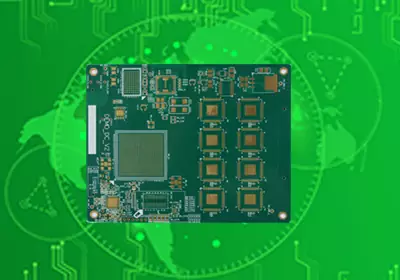
IC board components are the electronic components assembled on a printed circuit board to create a functional electronic system. An IC board normally contains one or more integrated circuits together with passive components, discrete semiconductors, power devices, connectors, sensors, timing components, and protection devices. The PCB provides the physical structure and electrical interconnections, while the components perform functions such as signal processing, power regulation, switching, sensing, communication, and control.
Although an integrated circuit may be the main processing device on a board, it rarely operates by itself. A microcontroller, processor, FPGA, or other IC typically requires power-supply components, decoupling capacitors, resistors, clock circuitry, signal-conditioning components, and external interfaces. The selection and placement of these supporting components can have a direct effect on signal integrity, power integrity, thermal performance, manufacturing yield, and long-term reliability.
What Are IC Board Components?
The term IC board components generally refers to the electronic parts mounted on a PCB that contains integrated circuits. In a typical design, the IC performs a central processing, control, conversion, or communication function, while other components provide the electrical conditions required for the IC to operate correctly.
For example, a microcontroller board may contain the MCU itself, decoupling capacitors, pull-up or pull-down resistors, a crystal or oscillator, voltage regulators, protection devices, connectors, and interface circuitry. A power-management board may instead place greater emphasis on MOSFETs, inductors, capacitors, current-sensing components, and thermal structures. The exact component mix therefore depends on the function of the board rather than on a fixed definition of an IC board.
This is also why an IC board should not be confused with an IC substrate. An IC substrate is a specialized interconnection structure used to package and connect a semiconductor die, whereas an IC board in the PCB context generally refers to a circuit board that carries integrated circuits and their supporting components.
Integrated Circuits
Integrated circuits are usually the most functionally significant components on an IC board. An IC combines electronic circuitry into a semiconductor package and can perform functions ranging from simple signal conditioning to complex computing and system control.
Microcontrollers are widely used when a board needs embedded processing, digital control, peripheral interfaces, and memory within a relatively compact device. Microprocessors are generally used when greater processing capability is required and additional external memory or support circuitry can be provided. Other common IC categories include memory devices, operational amplifiers, analog-to-digital converters, digital-to-analog converters, communication ICs, power-management ICs, interface controllers, FPGAs, and application-specific integrated circuits.
The package used for an IC also influences PCB design. Through-hole packages such as DIP are relatively easy to inspect and prototype, while surface-mount packages such as SOIC, QFP, QFN, LGA, and BGA allow greater component density. Fine-pitch and area-array packages can significantly increase routing and assembly requirements because many of their electrical connections are located beneath the package rather than along visible leads.
Resistors and Capacitors
Resistors and capacitors are among the most common supporting components found around integrated circuits. Their functions are simple in principle, but their selection and placement can become critical in high-performance designs.
A resistor can limit current, establish a bias condition, divide voltage, provide a pull-up or pull-down function, terminate a signal, or set the operating point of an analog circuit. On a digital IC board, resistors may also be used to configure interfaces or control signal transitions.
Capacitors serve several different purposes. They can provide local energy storage, filter unwanted voltage fluctuations, couple or decouple signals, and form part of timing or analog filtering networks. Decoupling capacitors are particularly important around IC power pins because they provide a local current path during rapid changes in load demand.
The physical location of a capacitor can therefore matter as much as its nominal capacitance. A capacitor that is electrically connected to an IC but placed far away may have more parasitic inductance in the connection path than a capacitor positioned close to the relevant power pins. IC board layout should therefore consider both the component value and the electrical path between the component and the device it supports. Modern IC board design practices place strong emphasis on power distribution, return paths, and decoupling rather than treating component placement as a purely mechanical task.
Inductors and Magnetic Components
Inductors are commonly used in power-conversion and filtering circuits. They store energy in a magnetic field and resist rapid changes in current, which makes them useful in switching regulators, DC-DC converters, filters, and other power-management circuits.
On an IC board containing a switching regulator, the inductor is part of the power-conversion path and therefore needs to be considered together with the switching IC, MOSFETs, capacitors, and current-return paths. Placement is particularly important because long connections around a switching loop can increase parasitic inductance and contribute to voltage overshoot, electromagnetic interference, and switching losses.
Other boards may use transformers, common-mode chokes, ferrite components, or other magnetic devices for isolation, filtering, or power conversion. Their size and electrical characteristics can influence both the PCB layout and the thermal design.
Diodes and Transistors
Diodes and transistors provide switching, rectification, protection, amplification, and power-control functions. A diode can be used for rectification, reverse-polarity protection, clamping, flyback protection, or signal demodulation, depending on the circuit.
Transistors are more versatile and include devices such as BJTs and MOSFETs. MOSFETs are particularly common on power-oriented IC boards because they can be used to switch and regulate power efficiently. They may operate alongside a dedicated gate driver or power-management IC rather than functioning as isolated components.
When these devices carry significant current or switch rapidly, PCB layout becomes part of the electrical design. Copper width, current-loop area, thermal vias, component spacing, return paths, and connection inductance all need to be considered. A transistor with an appropriate electrical rating can still perform poorly if the PCB does not provide a suitable current path or thermal path.
Timing, Interface, and Protection Components
Many IC boards require components that establish timing and communication functions. Crystals, oscillators, and clock-generation circuits provide reference frequencies for microcontrollers, processors, communication interfaces, and other timing-sensitive devices.
Connectors provide the interface between the PCB and external circuits. Depending on the application, an IC board may include board-to-board connectors, wire-to-board connectors, USB interfaces, Ethernet interfaces, coaxial connectors, card sockets, or specialized industrial interfaces.
Protection components are equally important when a board is exposed to external electrical connections. Fuses, transient-voltage-suppression devices, ESD protection components, common-mode filters, and other protective elements can help limit the effect of overcurrent, electrostatic discharge, voltage transients, or electromagnetic interference. Their location is often important because protection is most effective when unwanted energy can be diverted before it reaches sensitive ICs.

How IC Board Components Work Together
The performance of an IC board depends on the interaction between its components rather than on the characteristics of any single part. A processor, for example, needs a stable power supply, adequate decoupling, reliable clock signals, appropriate memory interfaces, and correctly designed communication paths.
The PCB itself is also part of this system. Copper traces determine how power and signals move between components, while vias connect different layers. Ground planes provide low-impedance return paths, and the layer stack-up influences impedance, capacitance, thermal behavior, and electromagnetic coupling.
This becomes increasingly important as component density and operating frequency increase. A modern IC board may contain BGA packages, fine-pitch components, high-speed interfaces, multiple power rails, and tightly controlled analog signals on the same PCB. In such designs, component placement and routing need to be developed together instead of treating them as separate stages.
IC Board Component Selection
Component selection should begin with the electrical and environmental requirements of the application. The nominal value of a resistor or capacitor is only one part of the decision. Engineers may also need to evaluate voltage rating, current rating, tolerance, temperature coefficient, package size, equivalent series resistance, equivalent series inductance, power dissipation, operating temperature, and expected lifetime.
For integrated circuits, the package, pin configuration, recommended operating conditions, thermal characteristics, and manufacturer layout guidance are particularly important. The IC datasheet and application documentation should take priority over generic PCB design rules because some devices have specific requirements for exposed pads, power planes, decoupling, thermal vias, or high-speed interfaces. Current IC board design guidance similarly emphasizes translating the IC datasheet, package requirements, power states, interfaces, thermal path, and manufacturing limitations into PCB layout decisions.
Component availability should also be considered during product development. A component that is technically suitable but difficult to source can create production risks later in the project. For products intended for long-term manufacturing, engineers may therefore evaluate approved alternatives and consider whether the PCB footprint can accommodate compatible components without compromising electrical performance.
IC Board Component Placement and PCB Layout
Once the components have been selected, placement becomes one of the most important stages of IC board design. Components should be positioned according to electrical relationships rather than simply arranged to make the board look organized.
Critical components should normally remain close to the ICs they support. Power-conversion components should be arranged to keep high-current switching loops compact. High-speed interfaces require controlled signal paths and suitable return-current structures. Sensitive analog circuits may need physical separation from noisy switching nodes, clocks, or high-current power sections.
Thermal considerations must also be incorporated into placement. Components that dissipate significant power may require larger copper areas, thermal vias, heat sinks, or a defined path into the PCB structure or enclosure. Conversely, temperature-sensitive components may need to be kept away from major heat sources.
For high-density packages such as BGA and QFN, placement also needs to account for fanout, via structures, solder-mask requirements, assembly capabilities, inspection access, and manufacturability. A layout that is electrically possible but difficult to manufacture can increase fabrication and assembly risk.
IC Board Components and Manufacturing
The manufacturing process begins long before components reach the assembly line. The PCB footprint must correspond correctly to the selected component, and the land pattern should be compatible with the package and assembly process. Incorrect footprints can lead to soldering defects, insufficient clearances, assembly problems, or difficult inspection.
Surface-mount technology is widely used for IC boards because it supports compact packages and high component density. However, through-hole components remain appropriate for certain connectors, mechanical interfaces, high-stress components, and applications where mechanical robustness is important.
The assembly process may include solder paste printing, component placement, reflow soldering, inspection, and electrical or functional testing. More complex IC packages may require additional inspection methods because some solder joints are located beneath the package and cannot be visually inspected from the board surface.
Manufacturing considerations should therefore be incorporated into the PCB design from the beginning. Design for manufacturability can reduce assembly variation and improve production yield without sacrificing the electrical requirements of the board.
Common Problems With IC Board Components
Problems involving IC board components can originate from the component itself, the PCB layout, the assembly process, or the interaction between them. An incorrect component value can cause an otherwise correctly routed circuit to malfunction, while an incorrect footprint can create soldering or connectivity problems.
Poor placement can create longer-than-necessary signal paths, inadequate decoupling, excessive switching-loop area, or insufficient thermal dissipation. Component tolerances and temperature variation can also affect circuit behavior when the design operates close to its electrical limits.
Assembly defects represent another source of failure. Solder bridges, insufficient solder, open joints, component misalignment, polarity errors, and hidden BGA solder defects can all affect board performance. Appropriate inspection and electrical testing are therefore important parts of IC board manufacturing.
IC board components include much more than the integrated circuits themselves. Resistors, capacitors, inductors, diodes, transistors, timing devices, connectors, protection components, sensors, and power-management devices all contribute to the final operation of the board.The most important consideration is how these components work together. A reliable IC board requires appropriate component selection, correct footprints, effective placement, suitable power and ground structures, controlled signal routing, thermal management, and a manufacturing process that can consistently reproduce the design.