Share cost-effective products and high-quality services with customers. Contact Us


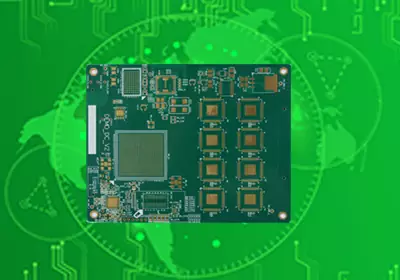
When choosing electronic components or arranging circuit board production, understanding what is a pcba board helps clarify what is being manufactured and delivered. A PCBA board is a printed circuit board assembly: a bare printed circuit board fitted with electronic components that are soldered into place to create a functional circuit. It may contain microchips, resistors, capacitors, connectors, inductors, and other components required by the product's design.
A PCBA board is found inside a wide range of electronic products, including industrial controllers, communication equipment, medical devices, automotive electronics, and consumer appliances. Although the finished assembly may look like a single board, its performance depends on several connected elements: the PCB itself, the components selected for the design, the solder joints, and the inspection and testing processes used during production.
What Makes a PCBA Different From a PCB?
A PCB and a PCBA are closely related, but they describe different stages of an electronic product.
A bare PCB provides the physical structure and conductive paths needed to connect electronic components. It includes an insulating substrate, copper traces, component pads, drilled or plated holes where required, and protective layers such as solder mask. At this stage, the board may have the correct electrical pathways, but it does not contain the components needed to perform its intended circuit functions.
A PCBA is the board after the required components have been mounted and soldered onto it. The assembled circuit can then perform tasks such as processing data, regulating voltage, amplifying signals, controlling motors, or communicating with other devices, depending on its design.
The distinction matters when preparing a manufacturing order. A request for bare PCBs generally covers board fabrication, while a PCBA order also involves component sourcing or supply, assembly, soldering, and any agreed inspection or testing. The exact scope depends on the project. A completed PCBA is not necessarily a fully finished electronic product because enclosure installation, cable integration, firmware programming, or system-level testing may still be required.
How Is a PCBA Board Manufactured?
The process of creating a PCBA board starts with engineering data and continues through component assembly and quality verification. The specific production sequence depends on component types, board construction, and assembly requirements.
Before production, the manufacturing team reviews the PCB design data, bill of materials (BOM), component placement information, and assembly instructions. These files establish which components are required, where they belong, and how they should be mounted. Any uncertainty about component specifications, package orientation, footprints, or unavailable parts should be resolved before assembly begins.
For surface-mount technology (SMT), solder paste is typically applied to the designated pads through a stencil. Automated placement equipment then positions components according to the placement data. The board passes through a controlled reflow soldering process, where the solder paste melts and forms electrical and mechanical connections as it cools.
Some designs also use through-hole components. Their leads pass through holes in the PCB and are soldered using an appropriate process, such as wave soldering, selective soldering, or manual soldering when suitable. Boards that combine surface-mount and through-hole components require an assembly sequence that accommodates both methods.
After soldering, the assembly proceeds to inspection and, where specified, electrical or functional testing. Depending on the board and its risks, this may include automated optical inspection (AOI), X-ray inspection for hidden solder joints, in-circuit testing, or functional testing. Not every project requires every method; the test plan should reflect the circuit's complexity and the consequences of potential failures.

What Components Are Found on a PCBA?
The components on a PCBA determine what the circuit can do. Their selection and arrangement depend on the product's electrical requirements, physical dimensions, operating environment, and intended functions.
Resistors limit current, divide voltage, and establish bias conditions. Capacitors support filtering, decoupling, energy storage, and signal coupling. Inductors are commonly used in power conversion, filtering, and RF circuits. Diodes control current direction or provide protection, while transistors can switch signals or amplify them.
Integrated circuits perform more complex functions. A microcontroller may execute control logic, a processor may handle data, and a power management IC may regulate supply voltages. Connectors provide interfaces to external power sources, sensors, displays, cables, or other circuit boards.
The component list alone does not determine whether an assembly will perform reliably. Footprint accuracy, component orientation, spacing, thermal behavior, power distribution, and signal routing all affect the result. Components must also be compatible with the intended soldering process and operating conditions.
What Determines PCBA Quality and Reliability?
A reliable PCBA board depends on more than accurate component placement. The PCB design, component quality, soldering process, and verification strategy must be coordinated to prevent defects and ensure repeatable performance.
Design for manufacturability helps identify issues before production, including insufficient component spacing, difficult-to-access solder joints, unsuitable footprints, and assembly constraints. Design for testability is equally important because test points, programming interfaces, and accessible connections can make electrical verification more effective.
During assembly, solder paste volume, component alignment, thermal profiles, and board handling must be controlled according to the requirements of the components and PCB. Process problems can lead to defects such as solder bridges, insufficient solder joints, component misalignment, or poor connections. Hidden joints beneath certain packages may require X-ray inspection because visual inspection cannot reliably reveal their condition.
Testing should match the intended application. Continuity checks can identify some electrical connection problems, while in-circuit testing can evaluate selected components and circuit nodes. Functional testing checks whether the assembled board performs specified operations under defined conditions. For products exposed to vibration, temperature changes, moisture, or electrical stress, additional qualification or environmental testing may be appropriate.
Clear documentation also supports consistent production. Approved BOM data, assembly drawings, revision control, inspection criteria, and traceability requirements help ensure that repeated manufacturing runs use the correct specifications.
When Do You Need PCBA Manufacturing?
PCBA manufacturing is appropriate when a project requires a populated circuit board rather than an unassembled substrate. It is used for prototypes, engineering samples, pilot runs, and volume production. The required production approach depends on the number of boards, component availability, design complexity, and the level of testing needed.
For prototypes, the priority may be to verify circuit behavior and uncover design issues before committing to larger quantities. For ongoing production, repeatability, component sourcing, process control, and traceability become increasingly important. High-density layouts, fine-pitch packages, mixed-technology assemblies, and specialized electrical requirements may also call for more detailed manufacturing reviews.
Before requesting a quotation, prepare the PCB fabrication files, BOM, component placement file when applicable, assembly drawings, and any programming or test instructions. Specify whether components will be supplied by the customer or sourced by the manufacturer, and clarify whether inspection, functional testing, coating, or other additional services are required.
Ultimately, understanding what is a pcba board means recognizing the difference between a bare circuit board and an assembled electronic circuit. The PCB provides the physical and electrical foundation, while component placement and soldering turn that foundation into a functional assembly. When design data, materials, manufacturing controls, and testing requirements are aligned, PCBA production can deliver consistent assemblies that meet the needs of the finished electronic product.